
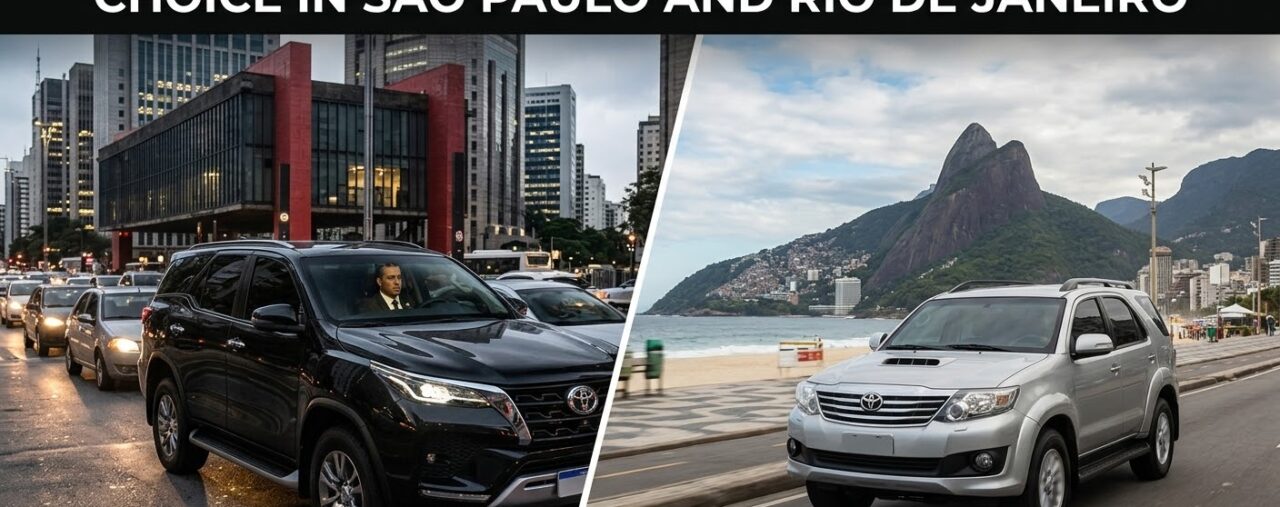
Safe Transportation in Brazil: Why Armor Is Essential in São Paulo and Rio de Janeiro
When a leadership team travels to São Paulo or Rio de Janeiro, the goal is clear: make decisions, move negotiations forward, and keep the agenda running at the right pace. The Brazilian operating environment, however, calls for more structured mobility protocols. This is not alarmism; it is management. In major cities where traffic increases exposure and route changes are common, safe transportation in Brazil means reducing variables, controlling time, and protecting key people with discretion.
That is why many multinational companies and high-standard local businesses treat mobility as part of Duty of Care: a formal commitment to protect employees and visitors. GoSafe Brazil operates in this context with a simple, corporate approach: combining a premium fleet, certified armor, and experienced drivers so your team can move with predictability, comfort, and privacy from the airport to the meeting.
Below, you will understand why armor especially in São Paulo and Rio de Janeiro can be a strategic investment, which technical standards matter most, and how smart logistics reduce risk without compromising the executive experience.
What “Safe Transportation in Brazil” Means at Corporate Standard
In a corporate environment, security is not a product; it is a process. Safe transportation in Brazil involves a chain of decisions before and during every transfer: vehicle selection, route choice, agenda alignment, communication, boarding and disembarking protocols, and above all prepared people.
Security as Business Continuity (Not “Reaction”)
On executive trips, a critical delay, unnecessary exposure, or an on-route incident can trigger cascading effects: meetings are compromised, reputation is impacted, and the company becomes vulnerable in front of stakeholders. That is why mature organizations work with exposure mitigation and planning. An armored vehicle, combined with a trained driver, adds an extra layer of operational control: you do not “wait for the unexpected” you prepare for it.
Discretion and Comfort Are Part of Protection
In premium services, the best protection is the one that does not interfere with the agenda. Modern, certified armor helps preserve a quiet, private environment. For the executive, that means working during the ride, taking calls, and reviewing materials calmly. The goal is not a “sense of risk,” but the feeling that everything is under control.
São Paulo: Productivity and Protection in the Financial Capital
São Paulo is the country’s main corporate hub, with a high concentration of offices and events in regions such as Faria Lima, Berrini, Paulista, and Itaim. The operational challenge is travel time: during peak hours, executives are more exposed at traffic lights, in congested corridors, and on routes with low predictability.
Less Exposure, More Predictability
In dense traffic scenarios, safe transportation in Brazil starts by reducing “stopped time” and keeping alternative routes available. A professional service operates with itinerary intelligence monitoring changes and selecting paths that preserve punctuality. Armor becomes a protection asset when exposure is unavoidable, especially on stretches with frequent stops.
The “Mobile Office” as a Competitive Advantage
When the vehicle offers premium comfort and privacy, commuting becomes an extension of work. Instead of losing 60 to 90 minutes per day in traffic, your leadership team gains a controlled environment for calls, alignment, and meeting preparation. For many organizations, this directly impacts executive efficiency and decision quality.
Rio de Janeiro: Strategic Logistics in Complex Urban Scenarios
Rio de Janeiro combines airports, hotel zones, and business centers with unique geography, where routes may cross areas that require extra attention. Again, the objective is not drama it is pragmatic planning. For executives and delegations, mobility must be linear: airport hotel meeting, with clear standards for boarding, disembarking, and coordination.
Routes and Timing as Part of the Protocol
In Rio, small timing changes can significantly alter traffic conditions and exposure level. A safe transportation operation in Brazil considers travel windows, stop points, alternatives, and when necessary fast route changes with clear communication. That is the difference between “getting a car” and operating with protected logistics.
Armor as an Additional Layer of Defense
In urban transfers, armor does not replace planning it complements it. For the manager, that means reducing the probability of interruptions and elevating protection against incidents typical of large cities. The result is peace of mind for both the operation team and the decision-makers.
GoSafe’s Armored Fleet: Technical Differentiators That Matter
For decision-makers, it is important to understand that not all armor is the same. Quality depends on certifications, materials, installation, and maintenance. In a premium service, the technical standard must go hand-in-hand with comfort and discretion.
Level III-A Armor and the Civil Standard in Brazil
Level III-A is widely recognized as the reference for civilian use. In practical terms, it is designed to withstand common handgun calibers. For corporate clients, the key is ensuring the armor is certified and that the vehicle maintains structural integrity and ergonomics avoiding improvised modifications.
Comfort and Discretion Without Compromising the Experience
There is a myth that armored cars are heavy, noisy, and uncomfortable. In modern operations, with updated sedan and SUV models, the focus is to preserve comfort standards: finishing, calibrated suspension, sealing, and acoustic quality. The goal is to keep the experience premium discreet and non-ostentatious.
Certified Glass and Reinforced Tires: Mobility as a Priority
In safe transportation in Brazil, mobility is as important as protection. Certified glass and appropriate components increase vehicle resilience. Reinforced tires, for example, help maintain drivability in adverse situations, enabling a quick move away from a risk point. These details, integrated with professional driving protocols, raise response capacity without escalating the service tone.
The Human Factor: Drivers Trained in Defensive and Evasive Driving
The vehicle is only half of the solution. The other half is the driver. In high-standard services, an executive driver is not “just driving” it is behavior, situational reading, corporate posture, and anticipation.
Corporate Posture and Discretion (Low Profile)
On leadership agendas, discretion protects. Trained drivers manage boarding and disembarking quickly, avoiding unnecessary exposure. The operation must feel natural: no excessive talk, no interruptions, and objective communication. This is low profile applied to executive mobility.
Local Knowledge and Escape Routes
São Paulo and Rio demand real knowledge of traffic, roadworks, sensitive zones, and alternatives. Experienced professionals master secondary routes and “escape zones,” reducing exposure time and keeping the schedule on track. For corporate travel, this translates into punctuality, stability, and less stress for the team.
Secure Itineraries and Smart Logistics: What Your Company Should Require
For decision-makers, the best service is the one that delivers predictability. That depends on clear SOPs (Standard Operating Procedures). Below are practices that differentiate professional operations from improvised solutions.
Agenda Briefing and Critical Points
An executive protocol starts with a briefing: times, locations, delay tolerances, constraints, and priorities. The goal is to prepare the operation for changes without the executive feeling friction. When time is tight, travel must be predictable, comfortable, safe, and agile. That requires preparation, not luck.
Monitoring and Proactive Communication
Changes happen: meetings run late, hotel access changes, event gates move. The differentiator is response. A mature operation keeps communication clear and objective, with fast alignment and immediate decision-making. When necessary, route adjustments should be discreet, focused on minimizing impact on the agenda.
Integration with Airport Meet-and-Greet and Hotels
For international executives, the journey starts at arrival. Meet-and-greet with signage, bilingual assistance, and coordinated pick-up reduces friction and improves the perception of safety. The client does not want to “understand local chaos” they want someone to solve it, efficiently.
Safe Transportation in Brazil and Compliance: What Changes When You Hire a Formal Service
In the premium market, compliance is not a detail. Hiring formal services protects your company against legal and reputational risk. In security and mobility, that means working with professional providers, documented processes, and transparent standards.
Why “Cheap” Can Become Expensive in Executive Mobility
Improvised solutions can fail at critical points: lack of contracts, low traceability, no training, irregular maintenance, and absence of protocols. In a corporate context, the risk is not only to the executive it is to the company, which is accountable for sourcing decisions and Duty of Care.
Hiring Criteria for Travel Managers and Facilities
To reduce uncertainty, adopt objective criteria:
- Updated fleet with documented maintenance
- Certified armor and defined technical standard
- Drivers with training and corporate posture
- Service SLA (response time) and support
- Clear process for quotes, routes, and changes
When Armor Is Recommended: Practical Decisions for São Paulo and Rio
Not every agenda requires armor, and the decision should be rational. However, in São Paulo and Rio, certain factors increase the recommendation for armored vehicles especially for leadership and strategic visitors.
Passenger Profile and Agenda Criticality
If the passenger is a decision-maker (C-level), an investor, an institutional representative, or an international team with an intense schedule, armor tends to be recommended. Not because “everything is dangerous,” but because role criticality requires maximizing protection and reducing margins for error.
Timing, Routes, and Exposure
Routes with frequent stops, night travel, multiple meetings across different regions, and high-circulation events increase exposure. In such cases, armor adds value: it complements logistics and reduces vulnerability during moments of lower control (for example, traffic lights and congestion).
Corporate Use Cases: How Safe Transportation Improves Visitor Experience
Foreign executives and delegations evaluate more than the meeting they evaluate the experience. Mobility influences the perception of organization, care, and professionalism. In high-standard operations, safe transportation in Brazil is also corporate hospitality.
Delegations, Investors, and Events
When your company hosts a group, the impact of a delay or confusing logistics multiplies. A premium service organizes times, vehicles, and meeting points, keeping the group cohesive and reducing dispersion. That improves punctuality and signals operational control.
Relocation and Expatriate Executives
In relocation processes, the first days define trust. Transportation, orientation, and bilingual support reduce cultural friction and increase the sense of safety. A well-designed operation avoids improvisation and protects time the executive’s most expensive asset.
How to Start: A Quick Checklist to Implement Safe Transportation in Brazil
1) Define who needs enhanced protection (role and criticality)
2) Map routes and travel windows (real agenda)
3) Set the service level (armored, bilingual, airport meet-and-greet, daily rates)
4) Require processes: SLA, contract, support, and SOPs
5) Standardize communication and internal approval (travel manager, facilities, leadership)
Protected Mobility Is Part of Strategy
In São Paulo and Rio de Janeiro, mobility is not an operational detail. It is a lever for efficiency, corporate care, and reputation. When transportation is predictable, comfortable, and discreet, the executive focuses on what matters: decisions and business. That is what safe transportation in Brazil should deliver without noise and without improvisation.
Your leadership team and strategic visitors deserve an impeccable travel standard. If you need safe transportation in Brazil with armored vehicles, smart logistics, and corporate service in São Paulo and Rio de Janeiro, talk to GoSafe Brazil. Send the city, dates, and itinerary and receive an objective proposal.